
Fall Pest Prevention: How to Keep Mice and Other Unwanted Guests Out This Winter
“It is thrifty to prepare today for the wants of tomorrow.”
— Aesop
Every fall, as the nights get colder, the mice seem to start planning their winter lodging.
Here on our homestead, mice are a fairly constant part of life. Our cats used to spend more time in the house and helped keep the indoor population under control. These days, the cats have mostly claimed my cabin office as their home base. They have a cat door through the window so they can come and go while they patrol the property, but they aren’t inside the house very often anymore. I think they prefer not to live with our six large dogs, and apparently the mice have noticed the change in management.
We also find mice in our sheds, where we may open a bag or move something that has been sitting for a while and discover a nest tucked inside. Vehicles that sit for long periods can become tempting, especially if food has been left behind. We have found them in campers too. Years ago in Aspen, we dealt with mice and pack rats, along with weasels and mink. Leather harness that was not being used or had not been cleaned recently seemed especially likely to be chewed.
Fall pest prevention means making the house, shed, garage, and storage areas much less inviting before cold weather encourages mice to move in.
Start With the Openings
Mice do not need a wide-open door. They work their way through gaps around foundations, pipes, vents, utility lines, siding, windows, and doors. The places where plumbing or wiring enters a building deserve a close look, especially under sinks and behind appliances.
We have used expanding foam, steel wool, and hardware cloth in different places over the years. Foam can fill an irregular gap, while steel wool or metal mesh adds a material that is harder for mice to chew through. The best choice depends on the location and whether the opening needs to remain ventilated.
Mice can squeeze through an opening about one-quarter inch wide—roughly the width of a pencil. That means some of the places that look too small to matter may be the very entrances that frustrate you later in the winter.
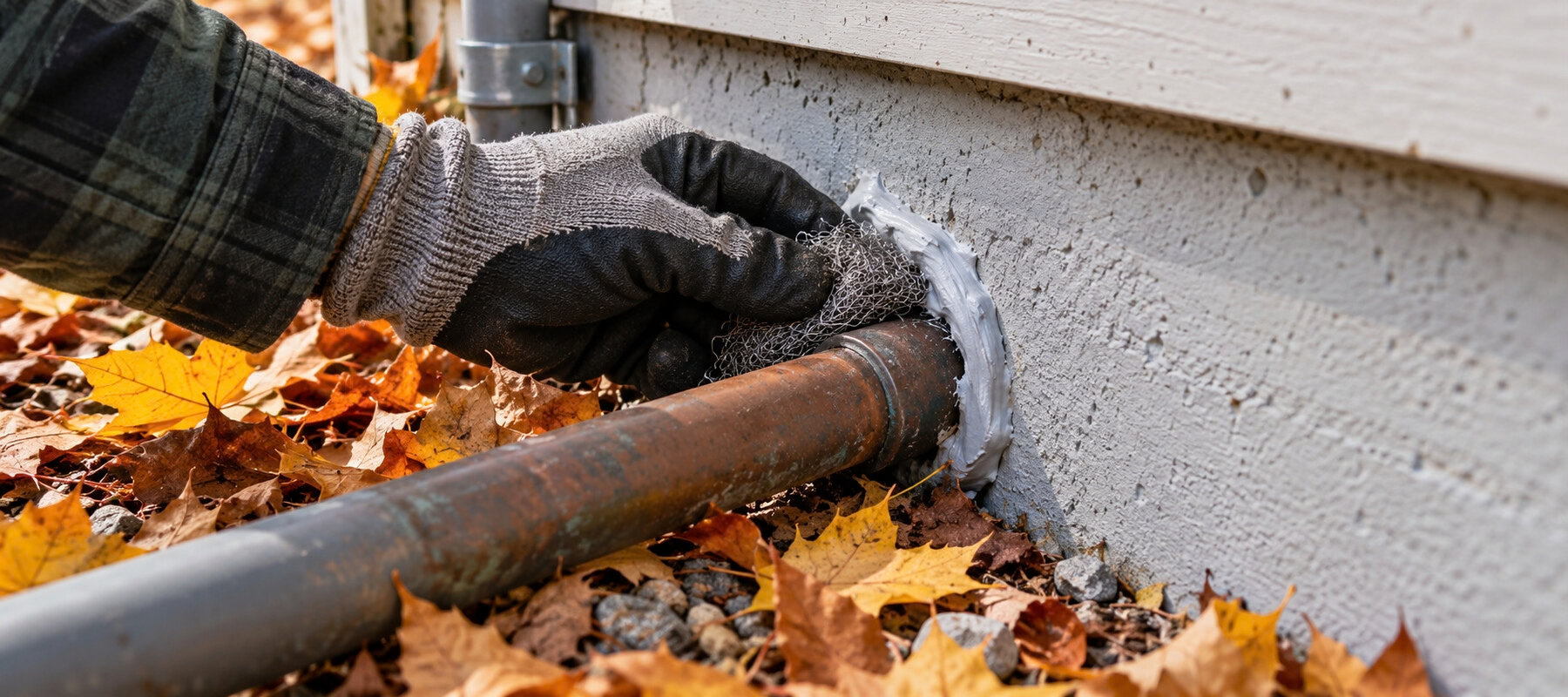
A slow walk around the outside of the house and outbuildings can reveal more than we notice while rushing through the day. Look low along the foundation, around corners, beneath siding, and anywhere a pipe, cable, or vent passes through a wall.
Make Food Hard to Reach
Food storage is one area where our systems work fairly well. Most of our chicken and livestock feed—including horse and pig feed—is kept in 55-gallon drums. We choose those drums because we can lock the lids down tightly enough that even the occasional bear has a hard time breaking into the feed. Birdseed is usually stored in a tin or a heavy plastic container.
The dog food is kept in a round 35-gallon plastic trash can in the mudroom. That works well as long as someone remembers to put the lid back on. When we forget, we occasionally find a mouse in the food that managed to get in but cannot get back out. Cat food goes into the sturdy jugs that cat litter comes in after the containers have been washed and dried.
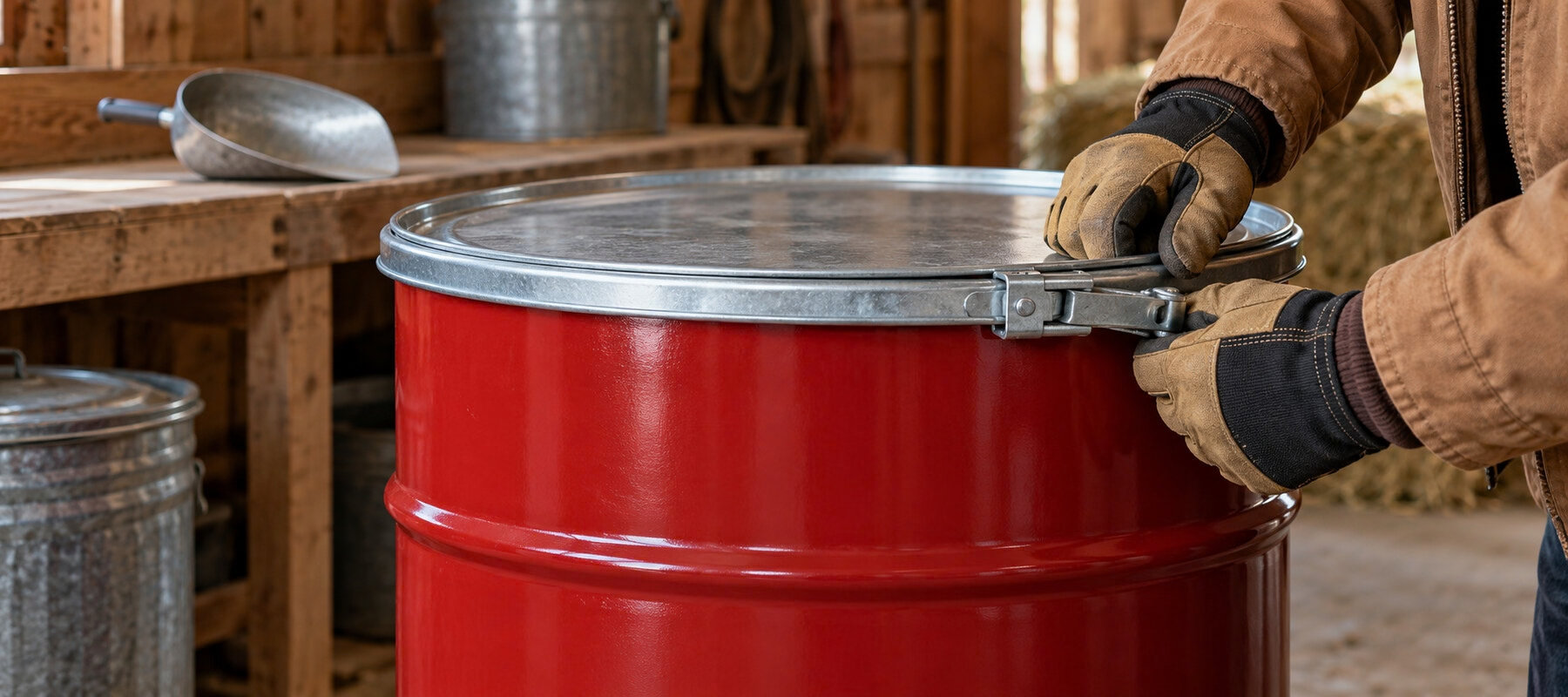
Seed cakes made with fat and birdseed need attention too. Anything rich in grain, seed, or fat can become an invitation when it is left on an open shelf. Check lids for a snug fit, clean up spilled feed, and avoid leaving opened bags in quiet corners.
Disturb the Comfortable Nesting Places
A little regular movement can make a big difference. When bags, boxes, and stored supplies in the house are shifted and checked, mice lose the quiet, undisturbed corners where they can settle in unnoticed.
Fabric, paper, cardboard, insulation, cushions, and other soft materials can all become nesting material. Store seasonal supplies in sturdy containers when possible, and check anything that has been sitting untouched. In sheds and garages, move bags and boxes away from walls so you can see what is happening behind them.
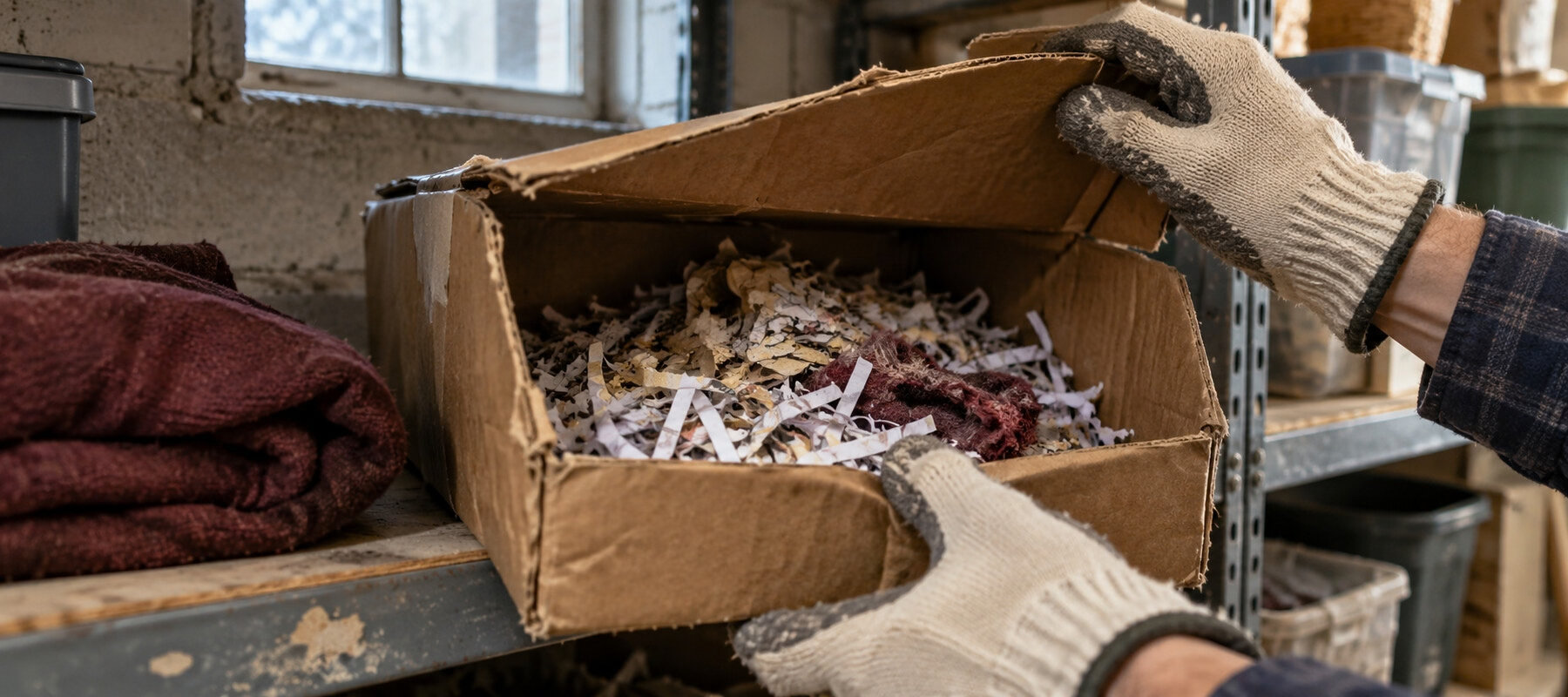
The same principle applies to campers and vehicles. Remove snacks, pet treats, tissues, paper napkins, and anything else that offers either food or bedding. Open compartments and look beneath seats before parking a vehicle or closing a camper for a long stretch.
When Mice Have Already Moved In
Once we see droppings, damaged food, gnaw marks, or nesting material, we know repellents alone are not enough. We have used snap traps, enclosed traps, live traps, and bucket-style traps in different situations. For us, snap traps are usually the most practical choice inside the house, while bucket traps have sometimes been useful in campers or the chicken coop.
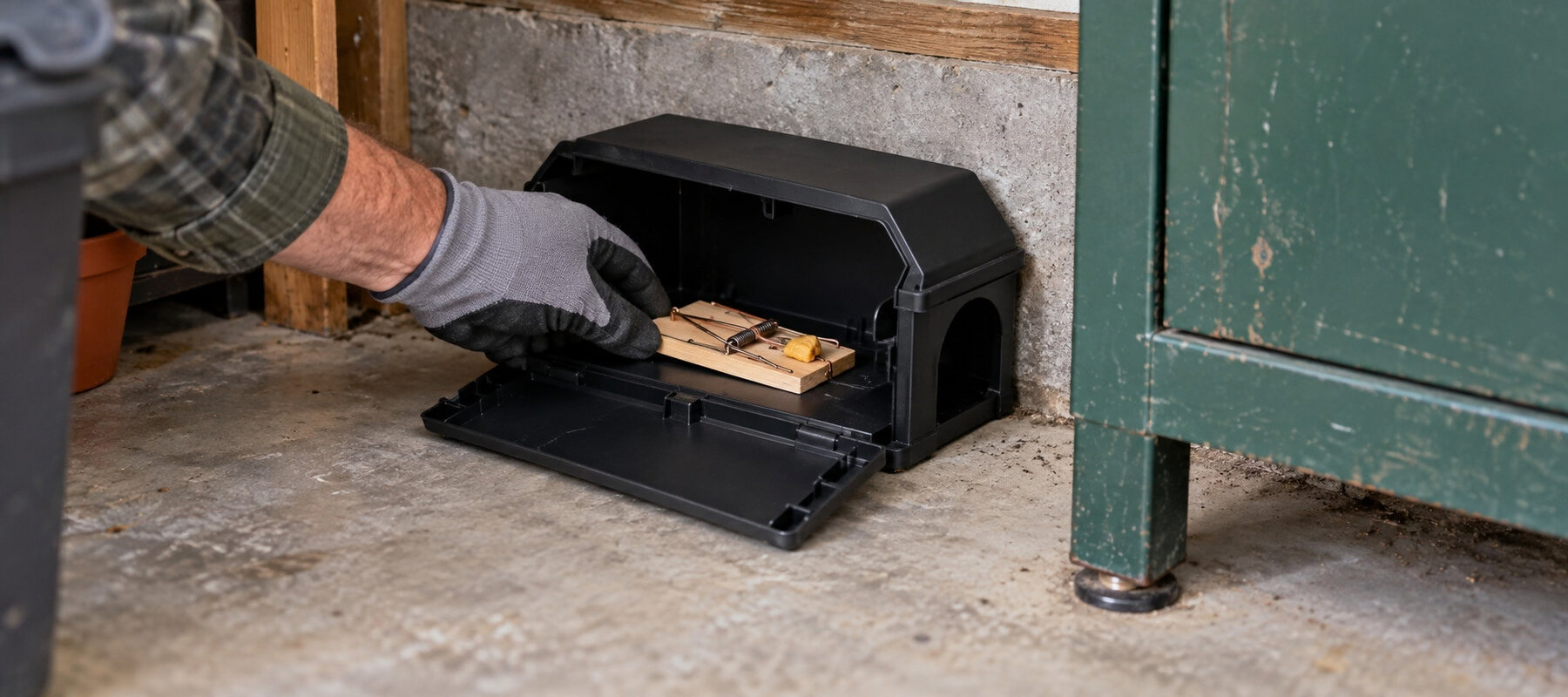
Snap traps are the traps we use most often inside the house. Because we have grandchildren and animals, we put them where little hands, paws, and curious noses cannot reach them. That may be under the sink, behind an appliance, inside the drawer beneath the oven, or inside a sturdy box with mouse-sized openings that the mice can enter but children and pets cannot.
Snap traps seem to be the most economical and effective of everything we have tried. Traps should be placed near walls and in areas where you have seen droppings, gnaw marks, nesting materials, or damaged food. The baited end should face the wall. Traps also need to be checked daily and kept completely out of reach of children and animals.
With children, dogs, cats, chickens, livestock, and wildlife around the property, we do not use rodent poison. We do not want an animal finding the bait or eating a poisoned mouse. When we are dealing with a larger animal, we may use a live trap and relocate it when that is appropriate and permitted.
How I Use Peppermint and Other Natural Deterrents
Peppermint is the essential oil I reach for most often around cabinets, drawers, storage areas, campers, and other places where mice have shown interest. It is inexpensive, I enjoy the aroma, and it is easy to refresh.
I add a few drops of Peppermint essential oil to a cotton ball, a piece of gauze, or a small washcloth. I keep the concentrated oil from touching painted, finished, or plastic surfaces because essential oils can sometimes affect those materials.
Then I place the cotton ball, gauze, or cloth inside a cabinet, drawer, storage area, or another spot where I have noticed activity. The aroma needs to be refreshed as it fades. I make it part of my weekly routine to go around and add another drop or two to keep the Peppermint aroma strong. One application in October will not continue working until April.
Cedarwood, Arborvitae, and Clove are other oils I use around storage spaces, although I tend to reach for Cedarwood and Arborvitae more often when insects are the problem. I also tuck bay leaves into some stored dry goods when the container is not completely airtight. These aromatic options are an additional layer; closing openings, removing food, disturbing nesting spaces, and setting traps when mice are already present still do most of the work.
Why We Choose doTERRA Around Our Animals
I have worked with animals and essential oils for nearly 15 years. During that time, I have also learned from veterinarians, animal trainers, and other experienced professionals who use essential oils thoughtfully with the animals in their care. I feel very comfortable using them in our household and around our animals.
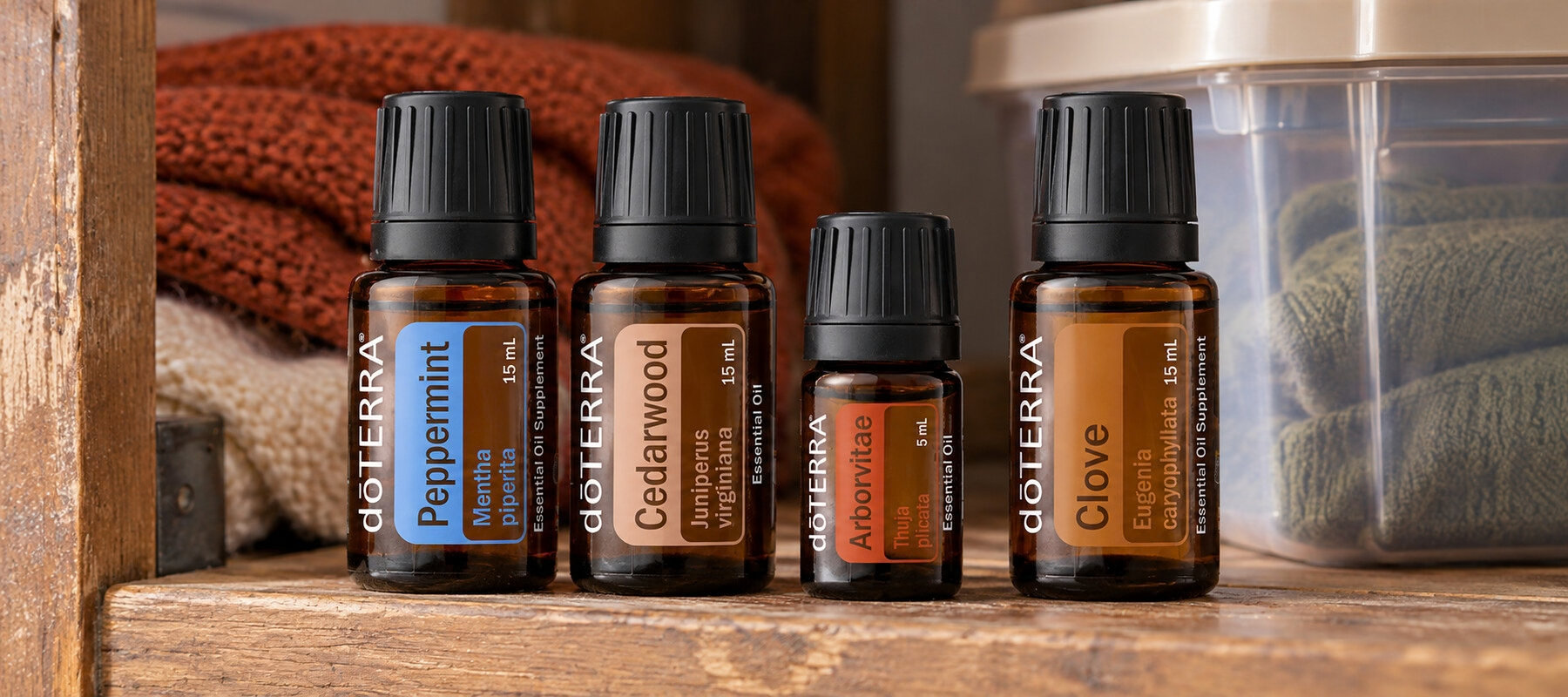
We choose doTERRA essential oils because I trust the company’s sourcing and testing standards. Each batch goes through several types of analysis to confirm its identity, chemical composition, purity, and consistency. The quality number on a bottle can also be entered into doTERRA’s Source to You website to view its testing information. That gives me confidence that the oil contains the botanical constituents listed for it and has been screened for adulteration or unwanted additions.
That confidence goes hand in hand with common sense. We keep undiluted oils and oil-soaked cotton balls where animals cannot lick, chew, spill, or rub against them. When we diffuse, we leave a door open so the animals can move away from the aroma if they choose. We also watch their behavior and adjust the amount or stop diffusing if an animal seems uncomfortable.
Most essential oils are safe around our pets. However, there are a couple that you want to use with caution. In our household, we use extra care with Tea Tree around cats and dogs. We also avoid Rosemary around an animal with a history of seizures. While we still occasionally use hot oils like Oregano, Cinnamon, and Lemongrass around the animals we do use extra caution. Seek further guidance from a veterinarian who understands both your animal and the responsible use of essential oils if you have concerns about a pet with a condition that might be exacerbated by a particular oil.
After years of experience, I feel confident using doTERRA essential oils around our animals. Purity, thoughtful placement, ventilation, and paying attention to the animal are all part of how we use them responsibly.
The Dryer-Sheet Question
I do not use dryer sheets in our laundry. I personally consider them one of the most toxic household products that I most want to avoid. I do not want to breathe their heavy fragrance, and I do not want the residue on our clothes, bedding, or against our skin.
However, I have occasionally used that strong chemical profile to my advantage in a camper or an inaccessible long-term storage compartment. If mice repeatedly try to nest in one particular spot and I will not be there often enough to refresh Peppermint, I may tuck in a dryer sheet as a last resort.
In my opinion even the rodents recognize a toxic product when they see it. I keep them away from children and animals and use them only in storage spaces where we will not have regular contact with them. I still remove food, close openings, and use traps when there are signs that mice have already moved in.
Cleaning Up Mouse Droppings
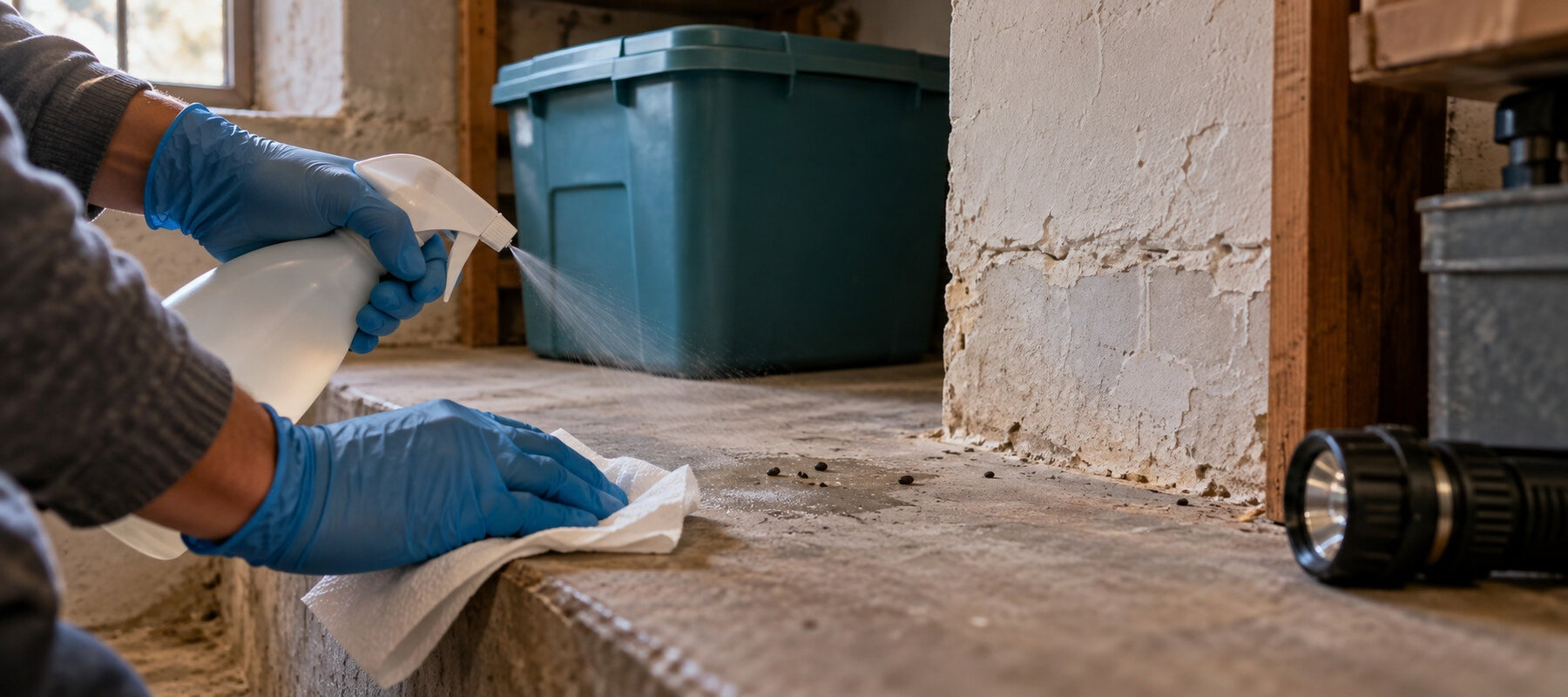
My instinct has always been not to vacuum mouse droppings if I can avoid it. Vacuuming or sweeping dry droppings can send contaminated particles into the air, so this is one of those times when a damp cleanup method is most useful.
I wet the area first, give the moisture time to settle the dust, and wipe everything up with something disposable, such as paper towels or baby wipes. The used material goes directly into the trash. Then I clean the surface thoroughly with a good household cleaner or an essential-oil cleaning spray that is appropriate for that surface.
Gloves are useful, especially when cleaning a larger area. If there is a heavy infestation, nesting material inside walls or insulation, or a large amount of droppings, that is beyond an ordinary wipe-down and may call for professional help.
A Quick Fall Mouse-Prevention Walk-Through
Before winter settles in, I work my way through the places mice are most likely to find appealing:
Check foundations, pipes, vents, utility lines, siding, windows, and other small openings.
Seal suitable gaps with expanding foam, steel wool, metal mesh, or hardware cloth.
Move feed, seed, pet food, and pantry staples into containers with tight-fitting lids.
Sweep up spilled grain, seed, crumbs, and pet food.
Shift bags, boxes, paper, fabric, cushions, and seasonal supplies so hidden nests do not go unnoticed.
Remove food and nesting materials from vehicles and campers.
Place traps where there are signs of activity, safely beyond the reach of children and animals.
Refresh Peppermint cotton balls or gauze as part of the weekly routine.
Use a damp method when cleaning up droppings.
Before the Mice Settle In
Mice are part of life on a rural property, but a few steady habits can keep many of them from settling into the house and outbuildings. Closing the small openings, protecting food, checking quiet storage areas, and responding quickly to fresh signs of activity all make winter a little easier.
Future Us will be glad we handled these small jobs before the cold weather arrived and the mice found the warmest corners first. I am working through this fall cleanup right alongside you.
A little at a time. One area at a time. Before the snow starts flying.
If you would like more practical fall-cleanup ideas, make sure you are on my email list so you do not miss the next post in the series.
From my homestead to yours,
Sandy
Sources and Further Reading
CDC rodent-control and cleanup guidance: https://www.cdc.gov/healthy-pets/rodent-control/index.html
doTERRA Source to You testing information: https://sourcetoyou.com