Fall Garden Cleanup: What to Cut Back, Leave, and Compost
“In seed time learn, in harvest teach, in winter enjoy.”
— William Blake
By the time the first hard frost finally ends my garden season, I am usually ready to be done.
The trouble is that the garden and I are not always finished at the same time.
I am still trying to protect the last tomatoes and peppers through those early frosts, hoping for just a few more warm afternoons. Then the forecast finally convinces me that the season really is over, and suddenly the kitchen counters are covered with tomatoes that need to ripen. There are vegetables waiting to be canned, frozen, or freeze-dried, and I am trying to make sure that as little food as possible goes to waste.
At that point, the idea of going back outside to clean the garden can feel like one job too many.
Some years I get it done. Some years I do not. When I do, I count it as a major win. When I do not, I usually regret it as soon as spring arrives and I am trying to work around old stalks, tangled vines, and everything I was too tired to deal with in the fall.
My approach to fall garden cleanup has changed over the years, though. I no longer believe a clean garden needs to mean bare soil, empty beds, and every dried plant hauled away. I lean toward regenerative gardening, so I want to protect the soil, feed the life in it, leave something useful for birds and insects, and return as much organic matter to the land as I reasonably can.
That means fall cleanup is less about clearing everything and more about deciding what should stay, what should go, and where each piece can do the most good.
Let the Harvest Set the Schedule
Fall garden cleanup rarely happens all at once here. As long as food is still coming in, harvesting and preserving take priority.
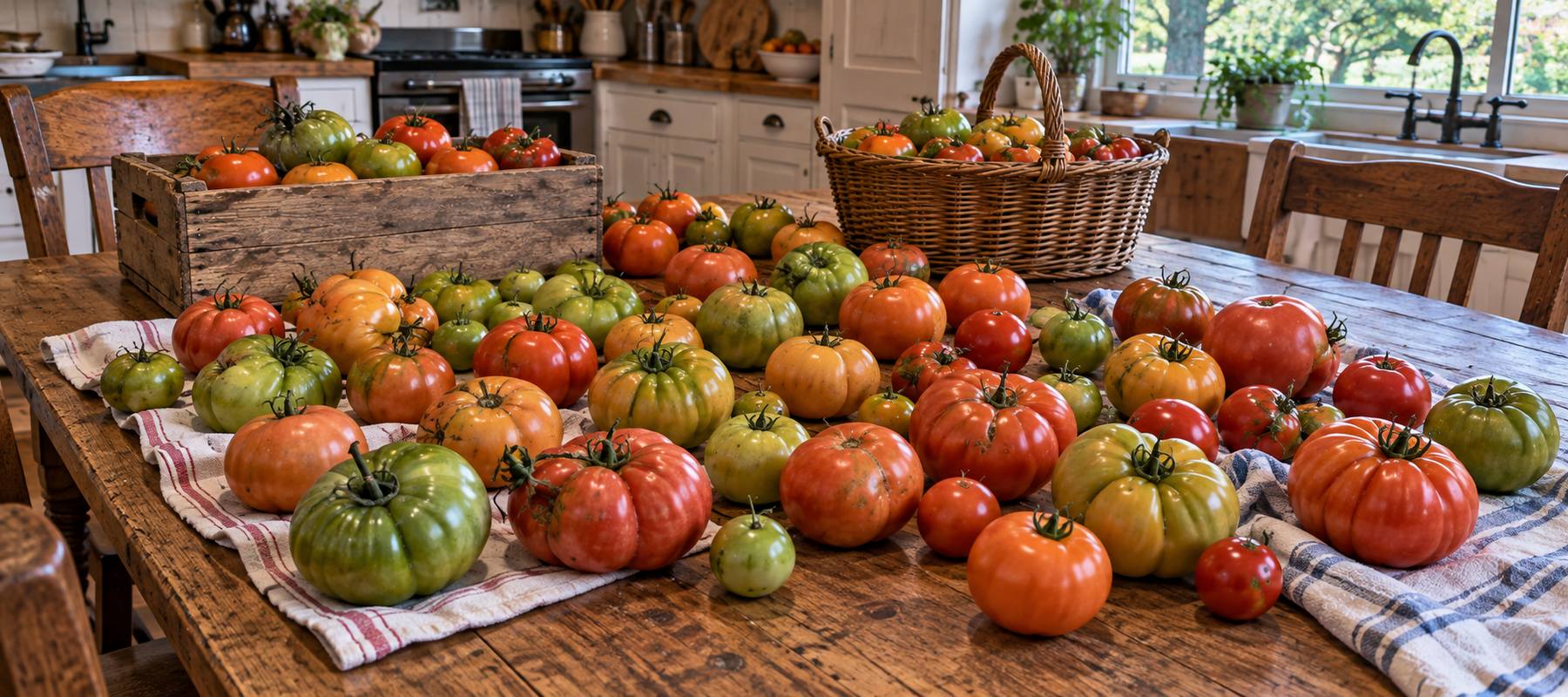
Rather than wait for one perfect day when the entire garden can be finished, I work in stages as time and weather allow. I may clear one empty bed, remove a diseased plant as soon as I see it, or spread leaves over a section that is ready for winter while other plants are still producing.
I save the food first, then work through the garden in manageable pieces.
Protect the Soil While You Clean Up
When I finally start cleaning the vegetable garden and raised beds, I do not automatically pull every plant out by the roots.
Healthy roots left in the ground can break down over time and return organic matter to the soil. They also leave the soil structure more intact than it would be if I yanked everything out and turned the entire bed upside down. Since I work hard to build healthy soil and encourage the tiny organisms and creatures living in it, I try not to disturb it more than necessary.
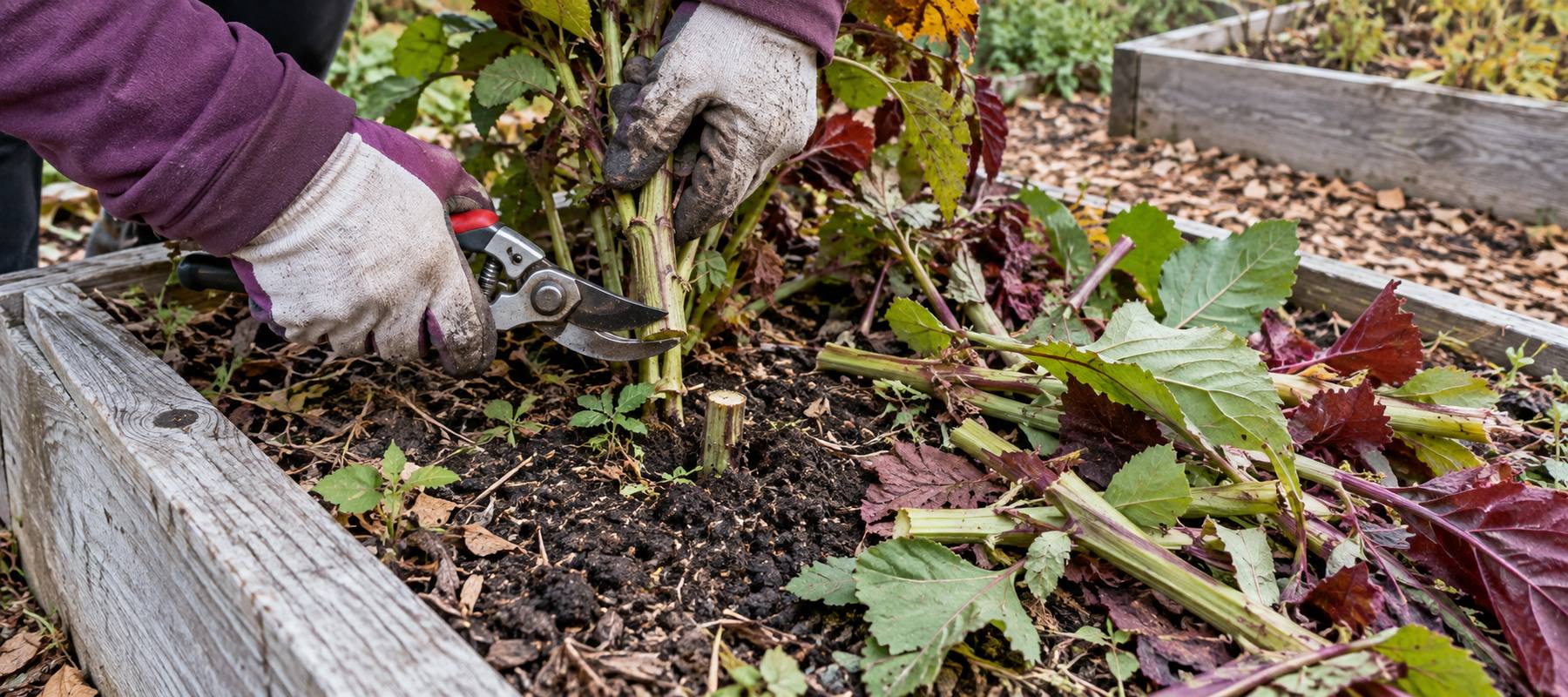
Most healthy plants are cut back near soil level. If a plant has a very thick stalk or a root mass that will make spring planting difficult, I may pull it completely. I decide plant by plant, based on whether leaving it will help the bed or simply create more work later.
I want to leave the garden ready for winter while protecting what we have built underneath the surface.
Decide Where Each Plant Should Go
As I work, garden material generally ends up in one of six places:
1. Left standing for birds, insects, or winter interest
2. Cut at soil level, with the roots left in place
3. Chopped and dropped onto the soil to decompose
4. Fed to the animals
5. Added to the compost pile
6. Bagged and taken away because it may carry a plant problem into another season
Thinking about these destinations makes the job easier. I do not have to treat every plant the same way, and neither do you.
What I Leave Standing
I leave most sunflower heads and other flower heads that have gone to seed. Winter birds can continue picking through them long after the rest of the garden is finished. If cornstalks still have usable ears on them, I may leave those standing for a while too.
Leaving selected stems, seed heads, and leaves also creates winter shelter for insects and other small garden life. The Xerces Society recommends leaving some fallen leaves, hollow stems, brush, and undisturbed soil because these spaces provide overwintering habitat for pollinators and other invertebrates. You do not have to leave the entire garden untouched to make a difference. Even one corner, border, or layer of leaves can offer shelter through the cold months.
What I Cut Back
Most healthy vegetable plants are cut near the soil rather than pulled. I remove the upper growth, but I am comfortable allowing many of the roots to remain and decompose underground.
Perennials are handled according to the plant and the time I have. We do not have many traditional flower beds, and pruning the roses, blackberries, and grapevines usually waits until early spring. If I manage to clean the vegetable garden before winter, I already feel as though I have accomplished something important.
What I Chop and Drop
Some healthy plants can stay right in the bed as chop-and-drop material. I cut the upper growth into smaller pieces and lay it directly over the soil to decompose. This is often called chop and drop.
I only do this with healthy plant material that does not have significant pest pressure, disease, or mature seeds I do not want spreading through the bed. When the material is a good fit, it keeps organic matter right where it can protect the soil and gradually return to it.
What I Remove Completely
Plants with blight, powdery mildew, or another concerning plant problem are treated differently. I pull those plants, bag them, and take them to the dump. They do not go to the animals, and they do not go into my home compost.
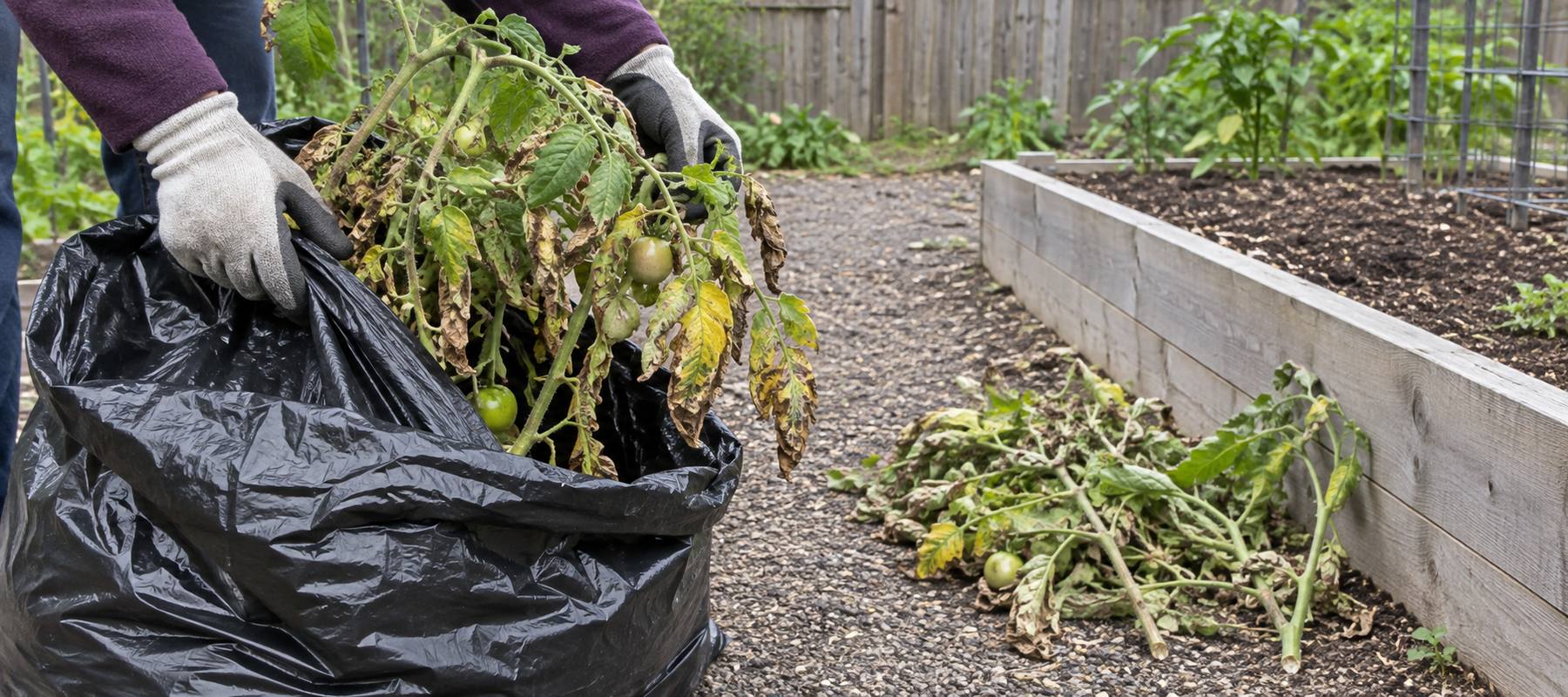
A carefully managed hot compost pile may reach temperatures that destroy some pathogens and weed seeds, but many backyard piles do not stay hot enough throughout the entire pile. I would rather remove questionable material than spread the same problem back into the garden with next year’s compost.
The Animals Are Part of Our Cleanup System
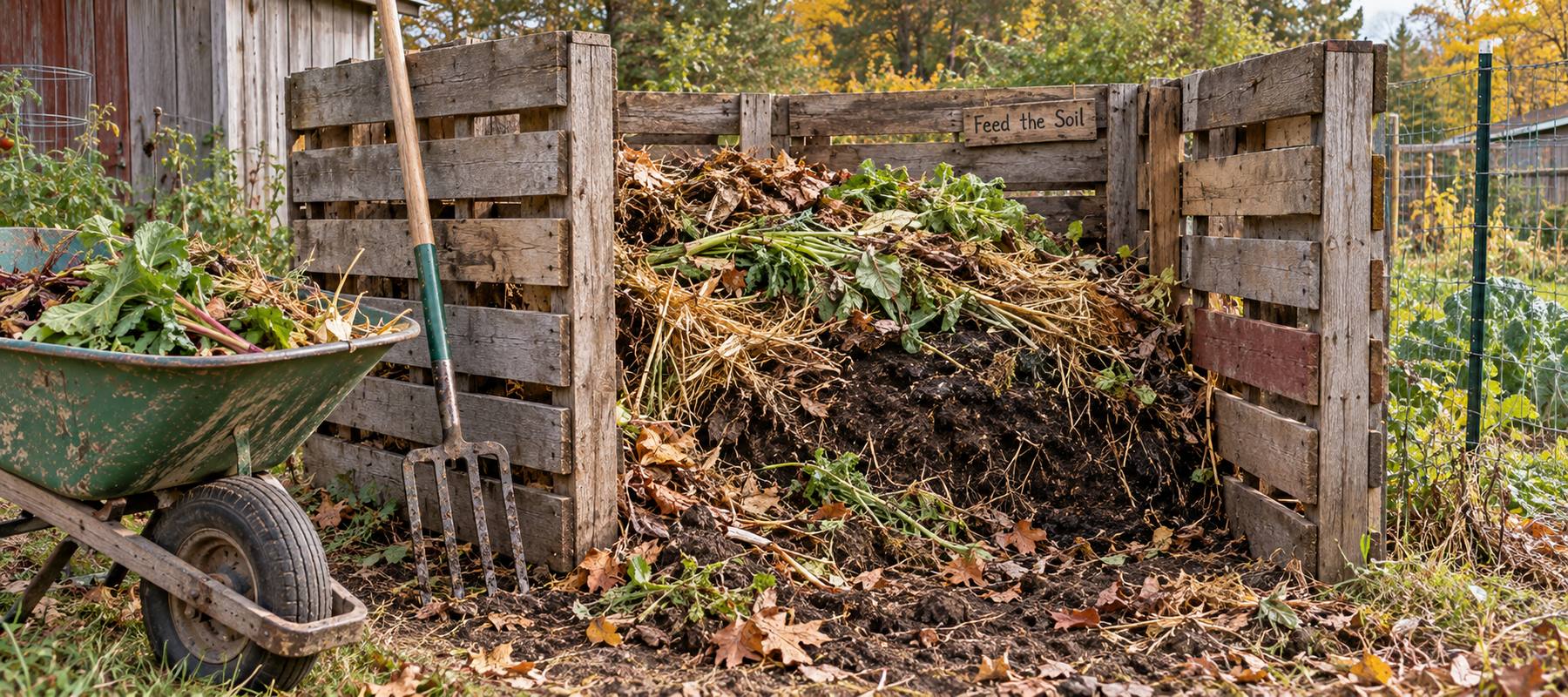
Very little healthy garden material makes it into our compost pile because we have another cleanup crew waiting for it.
The goats, cows, pigs, and chickens all enjoy different parts of the end-of-season garden. Healthy weeds, vegetable plants, overgrown produce, and garden leftovers may be tossed over the fence for the larger animals. The pigs and chickens help clean up vegetables that were damaged or simply did not make it into the kitchen. If produce contains garden insects, the chickens are especially happy to take that job.
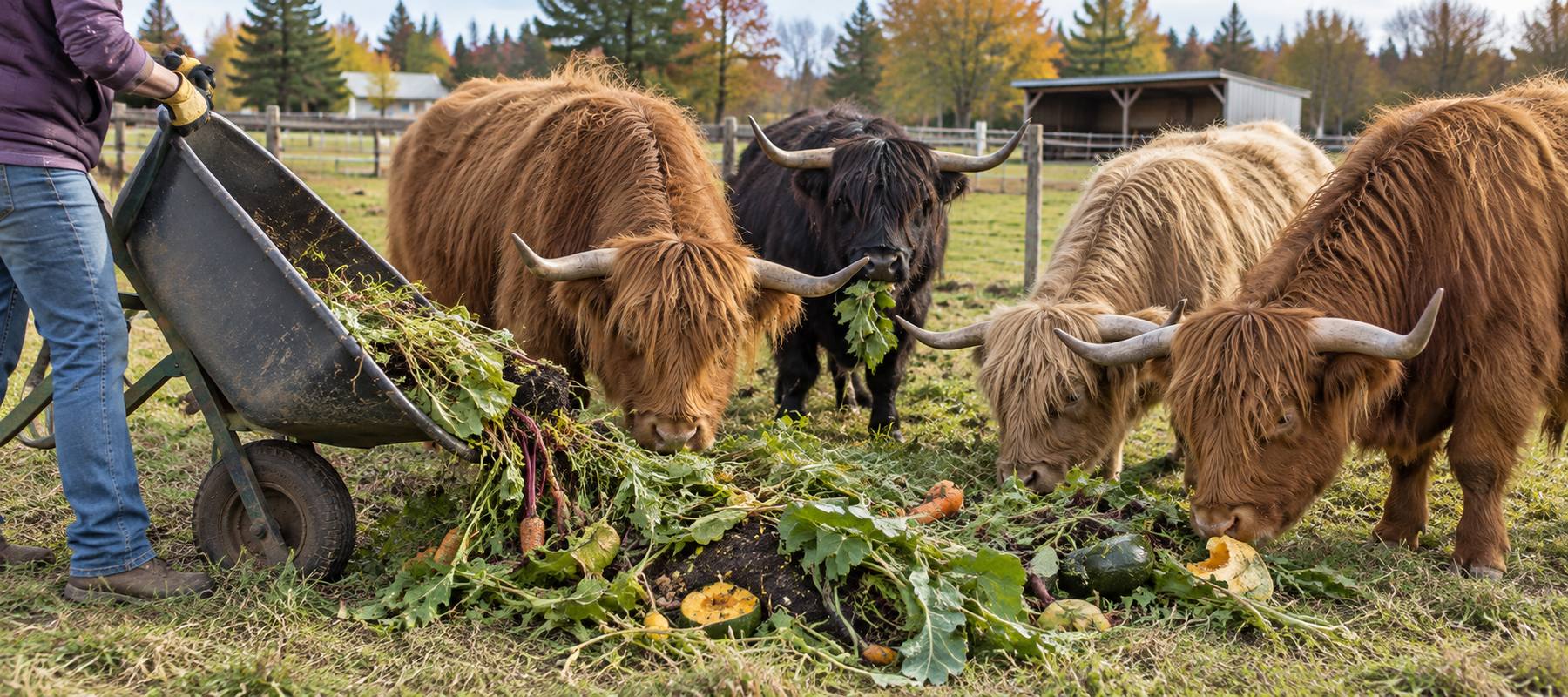
The animals do not come into the garden to do the cleanup themselves. I do not want them learning that the garden is a buffet they can visit whenever they feel like it. When the chickens are allowed out of their large yard to roam the acreage, we still try to keep the garden closed. The garden scraps go to the animals instead.
Our next step will be allowing the pigs into the orchard as the trees mature and begin dropping more fruit. They should be very willing helpers when that time comes.
Of course, not every garden plant is safe for every animal. I keep plants from the nightshade family—including tomato, pepper, potato, and eggplant foliage—away from our livestock. Anyone feeding garden leftovers should identify the plant and confirm that it is safe for the particular animals receiving it. When I am uncertain, it does not become feed, but I gladly compost it for future soil nutrition.
Put Fallen Leaves to Work
We do not have many trees dropping leaves across our lawn, so we rarely face the giant leaf piles that some families do. The front yard has one tree, and if we catch the leaves while they are dry, we may collect them with the lawnmower. Other times, we simply mulch them into the grass and let them break down there.
I value leaves enough that I will collect bags from other people who are trying to get rid of theirs.
Some of those leaves go to the goats and cows, who enjoy having something different to sort through. Some go into the compost. Many are spread in a thick layer over the raised garden beds, where they cover the soil through winter and gradually add organic matter as they decompose.
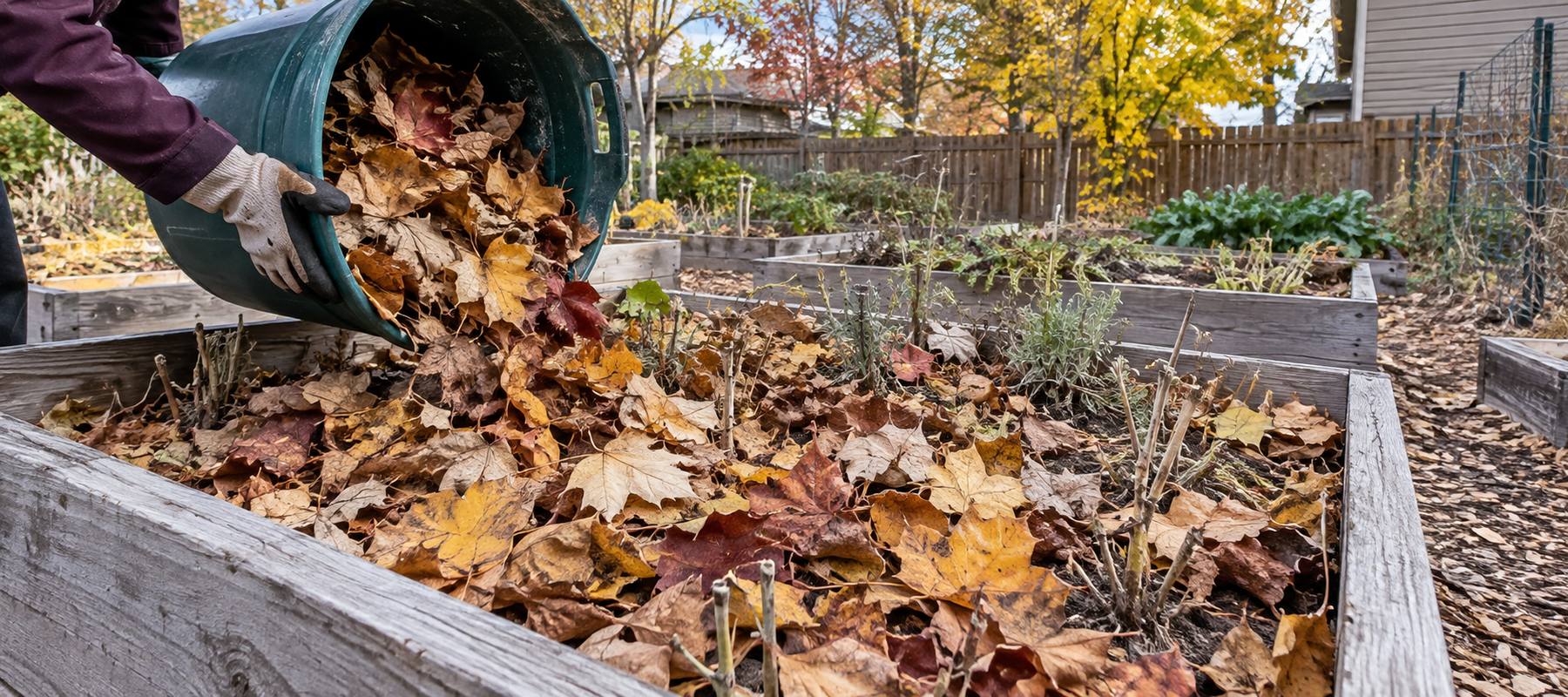
That layer matters to me. I do not want the garden soil sitting bare and exposed all winter if I can help it. Leaves, compost, mulch, or another natural covering can protect the soil surface and give all that underground life a more sheltered place to continue its work.
If leaves are blowing away from an exposed raised bed, shredding them first or placing a light layer of another mulch over them can help hold them in place. I do not worry about making every bed look identical. I am simply trying to keep the soil covered with something useful.
Our Chicken Yard Gets Its Own Kind of Fall Cover
We occasionally give the chickens leaves to scratch through, but our chicken yard is more likely to receive a layer of bark.
Calling it a run does not quite describe it. Their yard is roughly 50 feet by 60 or 70 feet, so there is plenty of room for them to wander, scratch, and look for bugs. The bark gives them material to work through, but it also serves a very practical purpose for the humans.
Winter chores are hard enough without slipping and sliding while carrying fresh water or trying to put chickens away in the evening. The bark gives us a more stable surface while giving the chickens something interesting to investigate.
Anything that helps the chickens and keeps me upright during winter chores is a win.
Flowerpots and Small Gardens Still Need a Plan
You do not need a large vegetable garden—or livestock waiting for the leftovers—for this approach to work.
If your garden consists of flowerpots on a balcony or patio, or one small raised bed, you can still sort what remains. Healthy annuals may be cut back and composted. Seed heads can be left for birds. Leaves can cover a small bed or be saved as brown material for compost. Diseased plants can be bagged and removed.
This is also the time to pull dead plants from flowerpots, cut back what needs attention, and decide which containers can remain outside. Empty pots can still collect water that freezes, and porous pots may crack when moisture freezes inside them. We covered pots and other loose outdoor supplies more fully elsewhere in the Fall Cleanup series.
The same sorting approach works in a small space. Use what can still feed the soil, wildlife, or compost, and remove anything that could cause trouble next season.
My Final Fall Weed Cleanup
If green weeds are still growing along the garden paths, outside the raised beds, beside the driveway, or around a fence line, I may do one final targeted treatment with my homemade vinegar spray.
Shopping-link note: Some links in this post connect to our doTERRA Wellness Advocate shops. If you choose to purchase through one of these links, the partner whose link you use may earn compensation at no additional cost to you. We only share products that genuinely fit the recipe or project.
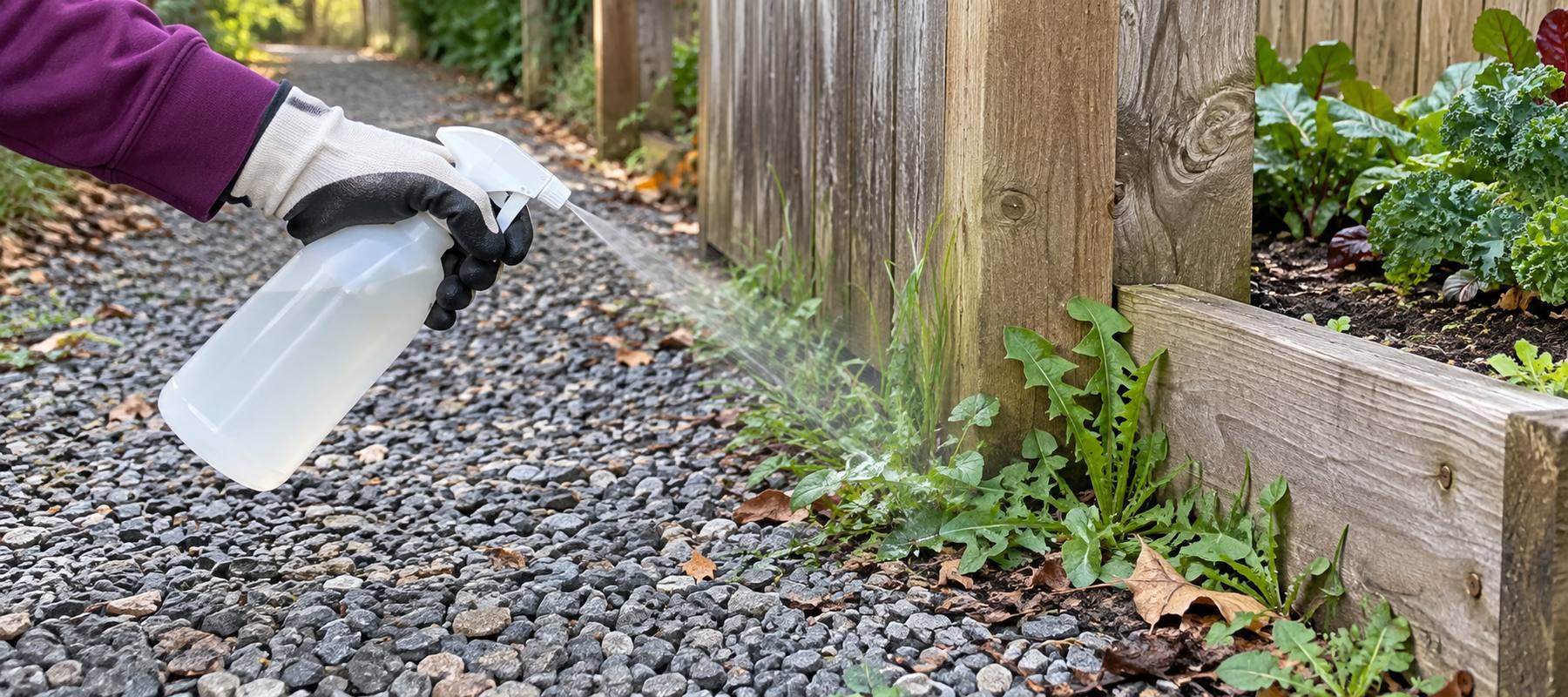
I use a concentrated agricultural vinegar rather than ordinary 5% kitchen vinegar. The commercial concentrate I purchase is generally around 30% to 35% acetic acid and is diluted before use according to the directions for that specific product. I add a small amount of dish soap to help the mixture spread across and cling to the leaves, and I add Cinnamon essential oil.
Cinnamon essential oil is one of the potent plant-based tools I use around the garden. It is part of the weed-control mixture that has worked well for me. The vinegar provides the fast contact action, the soap helps it coat the leaves, and Cinnamon is the essential oil I consistently include.
Where I Use It
I use this spray for careful, targeted cleanup in places such as:
• Garden paths
• The ground immediately outside raised beds
• Driveway and gravel areas
• Fence lines
• Areas where tall weeds may dry out or interfere with an electric fence
I do not routinely use it inside my raised garden beds. I am protective of the soil microbiome, earthworms, insects, and all the other life I have worked hard to encourage there. Those weeds are usually pulled by hand, then added to the appropriate garden-cleanup pile.
This spray is nonselective. It does not know the difference between a weed, a tomato plant, a flower, or healthy grass. I use it on a calm, dry day, aim carefully, and thoroughly wet the unwanted foliage. Wind can carry the mist onto plants I want to keep, so this is not a job I try to squeeze in when the weather is uncooperative.
I treat concentrated vinegar and essential oils with respect. I wear the protection required on the vinegar label, use a dedicated sprayer, and keep the mixture away from my eyes and skin. Choosing natural products also means learning to use them well.
Vinegar works as a contact treatment, so it is most effective on the foliage it thoroughly coats. A well-established perennial weed may grow back from its roots and need another treatment or physical removal.
When I Occasionally Add Salt
If I am treating an isolated part of the driveway or another spot where I truly do not want plants returning, I may add salt to the mixture. In my experience, that can keep all green growth away for a season and sometimes longer.
I use the salted version very sparingly. Salt can remain in the soil and move with water, so I do not use it in garden beds, pastures, lawn areas, or near valuable plants. I reserve it for isolated places where I truly intend to suppress all growth.
Cover the Soil With What You Have
Once the plants have been sorted and the beds are reasonably clear, I look at the soil itself.
If I have compost available, I can add some. If I have leaves, they can become a protective blanket. Other natural mulch can work too. I am less concerned about following one perfect formula than I am about avoiding bare, neglected soil through the winter.
I have not yet experimented much with winter cover crops, sometimes called green manure when they are grown to be cut back and returned to the soil. That is something I am interested in learning more about. Cover crops can keep living roots in the ground and protect soil between growing seasons, but the right crop and timing depend on climate and what will be planted next.
For now, leaves, compost, mulch, and the roots already in the soil are the tools I use most often.
A Realistic Order for Fall Garden Cleanup
When time is short and the weather is changing, this is the order that makes the most sense to me:
1. Harvest and preserve the food.
2. Remove plants with blight, mildew, or another concerning problem.
3. Save seed heads and other useful material for birds and winter habitat.
4. Cut healthy plants back, leaving roots where practical.
5. Chop and drop suitable healthy material onto the soil.
6. Feed safe garden leftovers to the appropriate animals or add them to compost.
7. Cover exposed soil with leaves, compost, or mulch.
8. Pull or spot-treat the final weeds around paths, bed edges, driveways, and fence lines.
9. Finish whatever else time and weather allow.
That final step matters because sometimes the snow arrives before the garden matches the picture in my head, and sometimes preserving the food takes every bit of energy I have left. If a few stalks or leaves are still there when the snow comes, I call that good enough.
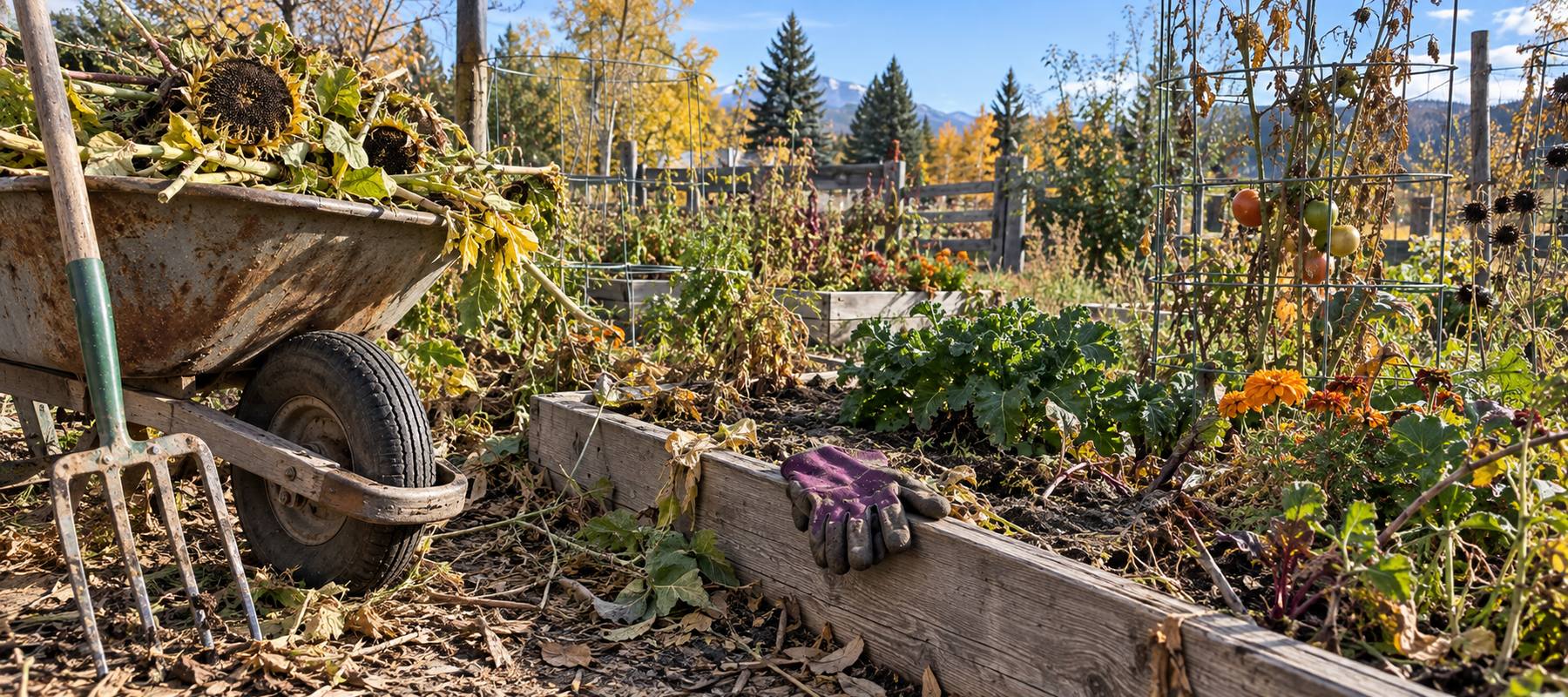
Leave the Garden Ready to Begin Again
Spring Me is always grateful when Fall Me takes the time to remove the diseased plants, cut back the thick stalks, cover the beds, and leave the garden reasonably ready to plant again. She is less grateful when she has to untangle last year’s tomato vines before she can begin.
I will be working through this right alongside you—saving the food first, feeding plenty of leftovers to the animals, hauling home other people’s bags of leaves, and counting the garden cleanup as a major win if I get it finished before the snow.
A little at a time. One area at a time. Before the snow starts flying.
If you would like a simple guide to help you work through the larger fall cleanup project, download my Fall Cleanup Checklist & Caddy Guide.
Explore the complete Fall Cleanup series for more seasonal homestead projects.
From my homestead to yours,
Sandy